Seven Knights Re:Birth Orca (Orkah) Guide: Best Builds
Master Orca in Seven Knights Re:Birth with top builds, skill priorities, team comps, rotations, PvP counters, and gear tips for Arena and Guild War.

Iâve been playing Seven Knights Re:Birth since launch and Orca â officially romanized as Orkah in some regions â is one of those characters who looked confusing to me for the first two weeks and then suddenly made complete sense once I understood the underlying mechanics heâs built around. That click moment happened mid-guild war when I watched an Orca carry a four-man team through a fight that should have been a loss by a wide margin. I spent the next three days pulling replays, testing builds in the training room, and talking to our guildâs top Arena player whoâd already figured Orca out before most of us.
This guide covers everything: his full kit breakdown in plain language, the builds that are actually performing in the current meta, the team compositions that let him do what heâs designed to do, and â equally important â how to counter him when youâre on the wrong side of an Orca-led push. Whether youâre building Orca yourself or facing him in Guild War and Arena, this guide has you covered. If you need to top up Seven Knights Re:Birth to fund his skill upgrades or pull his best gear, OLD STORE consistently offers better rates than the in-game store.
Who Is Orca â His Role and Why Heâs Misunderstood

Most players who pick up Orca for the first time slot him into a damage dealer role because his base Attack stat is high and his animations look aggressive. Thatâs not wrong exactly, but it misses what makes him genuinely good. Orca is a hybrid disruptor-carry â a character whose damage output is meaningful but whose real value is the way his kit creates pressure that forces opponents into bad decisions. He doesnât just deal damage; he changes what the enemy team can do while heâs doing it.
The players who build him purely for damage end up with a unit that hits reasonably hard but dies to focused burst and doesnât contribute much outside of his damage rotation. The players who build him around his disruptor identity end up with a unit that survives longer, enables his teamâs win conditions, and forces counter-play that the opponent often canât execute under pressure. Those are two very different Orcas, and the second one is significantly better in every competitive mode the game currently has.
Orcaâs Full Kit Breakdown â What Each Skill Actually Does
His skill descriptions in-game are written in the typical mobile game compressed format that leaves out important interaction details. Hereâs what each skill does in practice:
Skill | In-Game Description (Summary) | What It Actually Does in Combat |
Tidal Crush (Basic Attack) | Deals physical damage to target | Standard attack with a 15% chance to apply Waterlogged debuff on hit; Waterlogged reduces the targetâs Magic Defense by 12% for 2 turns â this proc is underrated because it stacks with other magic defense reductions |
Depth Surge (Skill 1) | Deals AoE damage to front row enemies and reduces their Speed | Hits all front-row enemies for 180% Attack damage and applies a 20% Speed reduction for 2 turns; Speed reduction in Seven Knights Re:Birth affects both action order and dodge rate, making this more valuable than it looks |
Abyssal Pull (Skill 2) | Pulls a single enemy to the front and deals damage | Forces an enemy from any position to the front row, deals 220% Attack damage, and applies Disrupted status for 1 turn; Disrupted prevents the target from using their skill on their next action â this is the skill that defines his disruptor identity |
Krakenâs Wrath (Ultimate) | Deals massive AoE damage to all enemies | Deals 280% Attack damage to all enemies, applies Waterlogged to all surviving targets for 3 turns, and grants Orca a 25% Defense buff for 2 turns; the self-buff is the part most players miss when reading the skill |
Depths Aura (Passive) | Increases Attack when Waterlogged enemies are present | Every Waterlogged enemy on the field gives Orca +8% Attack, up to a maximum of +32% with four Waterlogged enemies; this passive is why spreading Waterlogged matters and why his Ultimate followed by Depth Surge is a specific rotation worth memorizing |
The interaction that makes Orca click as a character: Krakenâs Wrath applies Waterlogged to all enemies, which immediately activates his passive for every surviving target. If you open with the Ultimate and there are four enemies alive when it lands, Orca immediately gains +32% Attack before his next action. If you then use Depth Surge on the now-Waterlogged front row, youâre hitting speed-reduced enemies with an Orca who has a 32% Attack buff active. That combination â Ultimate into Depth Surge â is his core damage rotation and the reason his actual damage output in practice is significantly higher than his base Attack stat suggests.
Stat Priority and Build Paths â What to Stack and Why
The build question with Orca comes down to a decision that shapes everything else: are you building him as a primary damage dealer who disrupts, or a primary disruptor who deals damage? Theyâre different builds with different stat priorities, and they suit different team compositions. Hereâs the full breakdown:
Build 1: Damage-Forward Orca / Best for Guild War Offense and PvE
Stat / Gear Slot | Priority and Reasoning |
Attack % | Primary stat â every percentage point of Attack amplifies both Depth Surge and Krakenâs Wrath; aim for 40â50% Attack from gear before diminishing returns |
Critical Rate | Second priority â Orcaâs multi-hit Ultimate crits independently on each enemy; high Critical Rate means the Ultimate is effectively amplified across the full AoE, not just one target |
Critical Damage % | Third priority â pair with Critical Rate; the crit damage multiplier applies per-hit so it compounds significantly in AoE situations |
Speed | Fourth priority â enough Speed to act before the enemyâs primary damage dealer; you want to land Abyssal Pullâs Disrupted status before they use their skill, not after |
Defense / HP | Minimal investment â damage build relies on kills being fast enough that Orca doesnât need high survivability; not suitable for sustained content |
Recommended Gear Set | Conquerorâs Set (2-piece Attack % bonus) + Predatorâs Crest (Critical Rate main stat) + Swift Pendant (Speed sub-stat) |
Build 2: Disruptor Orca / Best for Arena Defense and Guild War Defense
Stat / Gear Slot | Priority and Reasoning |
Effectiveness % | Primary stat â Effectiveness increases the success rate of Orcaâs debuffs (Waterlogged, Speed reduction, Disrupted); without sufficient Effectiveness, high-Resistance opponents shrug off his entire kit |
HP % | Second priority â defense builds want Orca surviving long enough to use Abyssal Pull multiple times; HP investment extends his disruptive window significantly |
Speed | Third priority â same reasoning as damage build but more important here; landing Abyssal Pull before the opponentâs carry acts is the entire purpose of this build |
Attack % | Fourth priority â still want some Attack so the disruption is backed by enough damage threat that opponents canât ignore him; pure utility with no damage threat is easy to ignore |
Defense % | Fifth priority â takes a hit that would one-shot a damage Orca; in defense guild war compositions this survivability matters more than raw damage output |
Recommended Gear Set | Mageâs Codex (2-piece Effectiveness bonus) + Wardenâs Plate (HP % main stat) + Swift Pendant (Speed sub-stat) |
My personal recommendation for most players is Build 1 for the first three months. The damage-forward version is easier to evaluate â you can see whether the builds are working from damage numbers â and it performs well in PvE content that most players spend the majority of their time in early. Build 2 becomes more relevant once youâre consistently competing in high-tier Arena and organized Guild War, where the disruption role is more clearly defined by the team compositions youâre running against.
Best Team Compositions for Orca â Who He Works With and Why

Orca is not a carry that works well in every composition. Heâs specifically strong when the rest of the team is set up to exploit the windows he creates with Abyssal Pull and Depth Surge. Here are the compositions that work in the current meta:
Composition 1: Orca + Magic Burst â The Waterlogged Amplifier
This is the composition I run most often and the one that clicked first once I understood the Waterlogged mechanic. Orcaâs Waterlogged debuff reduces Magic Defense by 12% per stack. Pair him with a magic damage carry and every Waterlogged target your magic dealer hits takes 12% more magic damage from all sources. If Krakenâs Wrath lands on four enemies and your magic carry immediately follows up, all four targets are taking amplified magic damage while Orca himself is hitting with a 32% Attack buff active. The timing window requires either similar Speed stats between Orca and the magic carry, or a Speed advantage that lets Orca act first.
Slot | Recommended Unit | Role in Composition |
Position 1 (Tank) | Any frontline tank with Taunt or high HP | Absorbs initial burst; keeps Orca alive long enough to use his Ultimate on turn 1 or 2 |
Position 2 (Orca) | Orca â damage build | Opens with Ultimate to spread Waterlogged and trigger passive; follows with Depth Surge for Speed reduction |
Position 3 (Magic Carry) | Celestine or Sylvia (high magic AoE damage) | Follows up immediately after Orcaâs Ultimate while Waterlogged is active; Magic Defense reduction amplifies their damage by 12% per stack |
Position 4 (Support) | Any healer or buffer with team-wide skills | Sustains the composition through multi-wave content; buffs the magic carryâs damage or applies additional debuffs |
Position 5 (Flex) | Additional damage or second support based on content | PvE: second damage dealer. PvP: silence or bind unit to extend Orcaâs Disrupted window |
Composition 2: Orca + Physical Burst â The Speed Reduction Enabler
This composition is less obvious than the magic burst setup but performs better in specific Guild War matchups where the opposing team runs high-Resistance units that partially shrug off Waterlogged. Depth Surgeâs Speed reduction applies regardless of Resistance â itâs a non-resistible debuff in the current patch, which means it lands on every target regardless of their defensive stats. A physical carry who benefits from attacking slowed enemies â typically units with mechanics that trigger on Speed-disadvantaged targets â gets consistent value from Orcaâs Depth Surge in ways that donât depend on the Waterlogged debuff landing.
Slot | Recommended Unit | Role in Composition |
Position 1 (Tank) | Tanker with Provoke or Taunt â Rook or Alphonse preferred | Hard frontline that forces enemy focus away from Orca during his setup turns |
Position 2 (Orca) | Orca â damage build with Speed advantage | Uses Abyssal Pull to disrupt the enemy carry, then Depth Surge to slow the remaining front row |
Position 3 (Physical Carry) | Kain or Bane (physical multi-hit or execute mechanics) | Physical carries with execute or bonus-damage-on-slowed-targets mechanics benefit directly from Depth Surgeâs Speed reduction |
Position 4 (Buffer) | Attack buffer or Defense shredder | Amplifies physical carryâs output; Defense shredder stacks with Orcaâs Waterlogged for combined mitigation removal |
Position 5 (Flex) | Second physical damage or bind/silence unit | Second damage source or lockdown extension depending on opponentâs composition |
Composition 3: Orca as the Sole Disruptor â Balanced Team for PvE
In PvE content â story stages, raid bosses, tower modes â the disruption role matters less than sustained damage output and survivability. This composition uses Orca primarily for his Krakenâs Wrath AoE damage and his passive Attack buff rather than his disruptor mechanics, which are less relevant against AI-controlled enemies that donât have skill usage patterns worth disrupting.
For PvE, run Orca with two supports and two other damage dealers. His Ultimate provides AoE damage for clearing wave content and his passive makes him self-scaling in multi-enemy encounters. The specific support choices depend on what content youâre pushing â healing for sustained dungeon content, barrier supports for boss phases with heavy burst, and debuff extension units for boss fights where Waterloggedâs Magic Defense reduction amplifies the teamâs total damage meaningfully.
Skill Upgrade Priority â Where to Spend Your Resources First
Skill upgrades in Seven Knights Re:Birth are expensive and the order matters significantly. Upgrading the wrong skill first can leave you weeks behind on the skills that actually define Orcaâs power budget. Hereâs the correct priority order:
Skill | Upgrade Priority | Why This Order |
Abyssal Pull (Skill 2) | First â max this before anything else | Disrupted duration and damage scale significantly with upgrades; the difference between Level 1 and Level 5 Abyssal Pull is the difference between a minor inconvenience and a game-changing lockdown |
Krakenâs Wrath (Ultimate) | Second | Ultimate damage scaling and Waterlogged duration both increase with upgrades; higher Waterlogged duration means more turns of passive Attack buff and Magic Defense reduction for teammates |
Depth Surge (Skill 1) | Third | Damage and Speed reduction magnitude both scale; still valuable but the first two skills have higher priority because they define his disruptor identity |
Depths Aura (Passive) | Fourth â if passive upgrade materials exist | Passive upgrade increases the Attack buff per Waterlogged stack; powerful at max but the active skills provide more immediate value per resource spent |
Tidal Crush (Basic) | Last â only after everything else is maxed | Basic attack scaling is the lowest priority upgrade in almost every Seven Knights Re:Birth character; the proc chance for Waterlogged increases slightly but itâs marginal compared to skill upgrades |
The gap between a maxed Abyssal Pull and a Level 1 Abyssal Pull is larger than it looks on the skill description screen. At max level, Abyssal Pullâs damage increases to 320% Attack and the Disrupted duration extends to 2 turns instead of 1. Two turns of Disrupted means the pulled enemy misses two skill uses rather than one. In a five-round Arena match, thatâs the difference between the enemy carry using their ultimate once and using it three times. Prioritize this skill. Itâs the one that makes Orca worth using in competitive content.
How to Counter Orca â What Actually Works Against Him
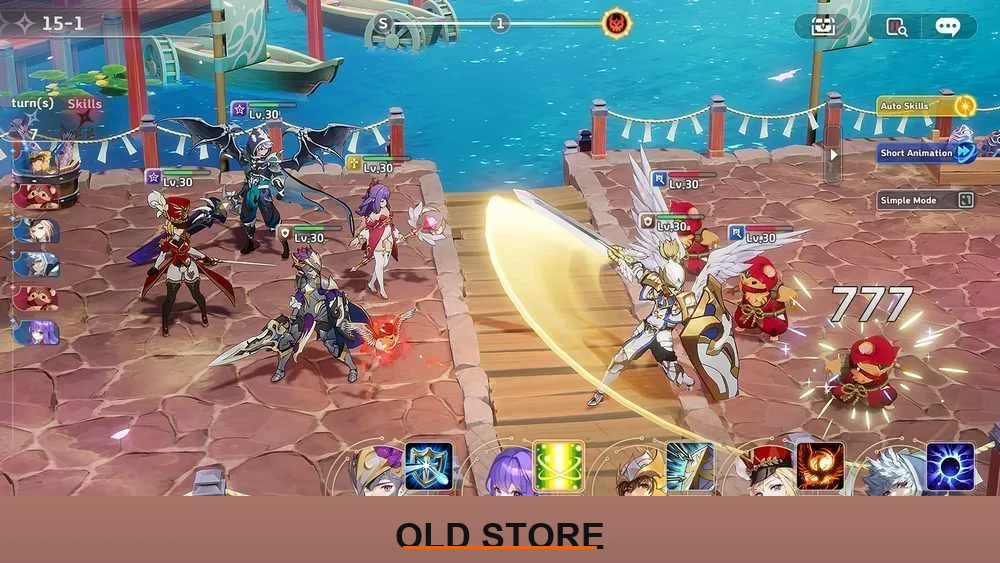
If youâre on the wrong side of an Orca-led composition in Arena or Guild War, there are specific counters that work and a lot of instinctive responses that donât. Iâve been on both sides of this matchup enough times to know which is which.
Counter Strategy 1: Resistance Stacking Against Waterlogged
Waterloggedâs Magic Defense reduction is the foundation of the magic burst composition that makes Orca most dangerous. Units with high Magic Resistance or gear that stacks Resistance reduce the Waterlogged proc rate significantly. If Waterlogged doesnât land consistently, Orcaâs passive Attack buff doesnât trigger at full stacks, and the magic carry following up after his Ultimate hits unamplifed targets. This counter specifically shuts down the Orca + magic burst composition without requiring a dedicated counter unit.
The units with the highest base Magic Resistance in the current Seven Knights Re:Birth roster are Lucius, Karin (awakened), and Rachel. Running one of these as your primary carry means Waterlogged has a high chance of being resisted, which cascades into Orcaâs passive not fully activating and the follow-up magic damage landing at base rather than amplified numbers. Itâs not a complete shutdown but it reduces the compositionâs effectiveness by 30â40% against a properly geared Resistance unit.
Counter Strategy 2: Speed Priority to Act Before Abyssal Pull
Abyssal Pull is the skill that defines Orcaâs threat in PvP. It pulls your key unit to the front and prevents their next skill use. The straightforward counter: make your carry act before Orca does. If your carry moves first and uses their skill before Orca gets Abyssal Pull off, the Disrupted status either lands on a unit thatâs already used their skill (minimal impact) or Orca has to spend his turn on a lower-priority target.
This counter requires meaningful Speed investment on your primary carry â enough to outspeed an Orca player whoâs also investing in Speed. In the current meta, around 180â200 Speed on your carry is sufficient to act before most Orca builds, since the majority of Orca players optimize for damage and effectiveness rather than maximizing Speed. If youâre facing a Speed-stacking Orca, you need to either match his Speed or accept that Abyssal Pull will land and plan your composition around the assumption that your carryâs turn 1 skill is going to be disrupted.
Counter Strategy 3: Cleanse and Immunity Units
The cleanest counter to Orcaâs entire kit is a unit that cleanses debuffs or applies Immunity to your team before his debuffs land. Cleanse removes Waterlogged, Disrupted, and the Speed reduction from Depth Surge simultaneously. If a cleanser acts immediately after Orcaâs turn, his setup is entirely wasted and heâs effectively spent his action on a debuff that didnât stick.
The best cleanse units in the current Seven Knights Re:Birth roster for this specific matchup are Eileene (team-wide instant cleanse on skill), Yumi (cleanse + Immunity application), and Shane (cleanse with attack buff attached). Yumi is the most valuable of the three specifically because her Immunity application prevents the next round of debuffs from landing as well, not just the current ones. Against an Orca player who correctly sequences Ultimate into Depth Surge, Yumiâs Immunity on your team means the second wave of debuffs bounces off entirely.
Counter Method | Effectiveness vs Orca | Best Units / Implementation |
Magic Resistance stacking | High vs magic burst comp; Medium vs physical comp | Lucius, Karin (awakened), Rachel as primary carry; gear with Resistance sub-stats |
Speed priority on carry | High if you can consistently outspeed him | 180â200+ Speed on primary carry; Swift gear set on the carry rather than damage items |
Cleanse + Immunity | Very High â shuts down his full debuff kit | Yumi (best), Eileene (second), Shane (third); must act immediately after Orcaâs turn for maximum effectiveness |
Burst kill before he acts | High if your team has enough burst | Focus Orca first before he Ultimate; requires significant burst damage investment and Speed advantage |
Silence/Bind on Orca | Medium â delays but doesnât prevent his kit | Any silence or bind unit that can act before Orca; delays Ultimate and Abyssal Pull by 1â2 turns |
Taunt absorption | Low â Abyssal Pull ignores taunt positioning | Taunt does NOT prevent Abyssal Pull from pulling your carry regardless of front row positioning; do not rely on this |
The counter Iâve had the most success with against organized Orca compositions in Guild War is Yumi as a second support alongside a Speed-priority carry. Yumi cleanses and applies Immunity, the carry acts before Orca lands Abyssal Pull, and the Orca playerâs entire setup turn is wasted. That combination doesnât require heavily geared counter units â it just requires understanding what Orca is trying to do and pre-empting it with the right team structure.
Orca in Each Game Mode â Where Heâs Strong and Where He Isnât
Game Mode | Orca Strength | Notes |
Arena (Offense) | Very High | Abyssal Pullâs Disrupted status shuts down opponent carries reliably; damage build performs well in short PvP rounds where his Ultimate hits before defenses are set |
Arena (Defense) | High | Disruptor build on defense forces opponents to either bring a cleanser or accept that their carryâs turn 1 skill is disrupted; harder to counter than pure damage defenders |
Guild War (Offense) | Very High | Waterlogged amplification paired with a magic carry is one of the most consistent GW offense compositions in the current meta; Speed reduction from Depth Surge prevents enemy counterattacks |
Guild War (Defense) | High | Defense compositions with Orca punish players who donât bring a cleanser; effective as part of a 3-man defense team where his disruption creates problems for unfamiliar opponents |
Story / PvE Campaign | Medium | Good AoE with the Ultimate; passive scaling in multi-enemy waves is useful; disruptor skills are mostly wasted on AI; more of a solid contributor than a standout carry in PvE |
Raid Boss | Medium-Low | Single-target raids donât benefit from AoE Ultimate; Abyssal Pull has no meaningful target to pull in single-boss content; Depth Surgeâs Speed reduction doesnât help in most boss mechanics |
Tower of Trials | Medium | Multi-wave format suits his AoE; Waterlogged spreading across wave enemies means passive stays active; survivability in disruptor build needed for later floors |
The honest assessment: Orca is excellent in PvP modes and average in dedicated PvE modes. If your primary goal is Arena ranking or Guild War performance, heâs one of the better investments you can make in the current patch. If youâre primarily a PvE player pushing story content and raids, there are characters who contribute more consistently in those modes. Most players who play both modes find Orca worth the investment because PvP performance is where progression gates tend to matter most in Seven Knights Re:Birthâs long-term systems.
Common Orca Mistakes and How to Fix Them
â¢Using Abyssal Pull on a tank instead of the enemy carry. This is the most common Orca mistake I see in replays from new players using him. Abyssal Pullâs Disrupted status is valuable because it prevents the targetâs next skill use. Pulling a tank to the front disrupts a unit that wasnât going to do much with their skill anyway. Pull the magic carry, the damage dealer, or the support â whichever unitâs skill would do the most damage to your team if it lands. Pulling the tank wastes Abyssal Pullâs most important function.
â¢Saving Krakenâs Wrath instead of opening with it. The Ultimate is most valuable on turn 1 or turn 2 before any enemies have used their skills and while all targets are alive for maximum Waterlogged spread. Players who save the Ultimate âfor when it mattersâ often end up using it on two or three surviving enemies rather than four or five, which means fewer Waterlogged stacks, a lower passive Attack buff, and less Magic Defense reduction for the follow-up magic carry. Open with the Ultimate unless you have a specific reason not to.
â¢Building Orca without any Speed investment and wondering why Abyssal Pull never lands first. Speed determines action order. If Orca is slower than the enemy carry, the enemy carry uses their skill before Abyssal Pull can disrupt them, and Orcaâs entire disruptor identity fails. Minimum viable Speed for Orca in PvP is enough to act before your primary threat. Check the opponentâs Speed stat in the pre-battle screen and confirm your Orca is faster before assuming his disruption will work.
â¢Ignoring Effectiveness when building the disruptor version. Effectiveness determines whether debuffs land on high-Resistance opponents. An Orca with no Effectiveness investment will have Waterlogged and Speed reduction resisted by tanky opponents whoâve invested in Resistance gear. If youâre building disruptor Orca, Effectiveness is the primary stat. Without it, his debuffs fail against the opponents who matter most in high-tier content.
â¢Running Orca without a unit that benefits from Waterlogged. His passive and his Waterlogged debuff create value specifically when the rest of the team can exploit the Magic Defense reduction and the Attack buff. Running Orca in a team of three physical damage dealers with no magic carry means the Waterlogged is providing almost no value beyond the passive Attack buff. Build the team around exploiting what Waterlogged does, not just around what Orca does in isolation.

Conclusion
Orca is one of those characters in Seven Knights Re:Birth who rewards players who actually read his kit carefully over players who just look at his base stats and slot him in. The Waterlogged passive interaction, the Abyssal Pull disruption timing, the Ultimate-first rotation â none of that is obvious from a first glance. It took me watching replays and talking to better players to understand why he was performing the way he was in competitive modes.
The builds that work: damage-forward with Attack %, Critical Rate, and Critical Damage for PvP offense and PvE; disruptor with Effectiveness, HP, and Speed for Arena defense and Guild War defense. The team compositions that work: Orca + magic carry for Waterlogged amplification; Orca + physical carry with Speed reduction exploitation for Resistance-heavy matchups. The skill priority that works: Abyssal Pull first, Ultimate second, everything else after.
If youâre facing him: bring Yumi or another cleanser, Speed-stack your carry to act before his Abyssal Pull, and donât rely on Taunt to protect your backline because it doesnât. If youâre building him: read the Waterlogged passive carefully, open with the Ultimate in PvP, and pull the carry not the tank. Get those fundamentals right and Orca does exactly what the best players using him are already doing. Good luck in the arena.
If you need to top up Seven Knights Re:Birth to fund his skill upgrades or pull his best gear, OLD STORE consistently offers better rates than the in-game store.